Ep 19: Spring Landscaping 101 | Garden Beds, Yard Grading & Keeping Critters Out
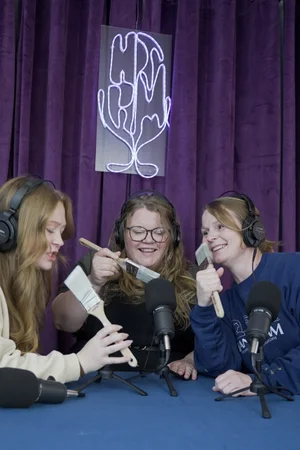
Welcome back, besties, to How to Handyma'am! We survived a very long, very exhausting week, but we are so excited that spring has finally sprung here in Michigan! We are kicking off our April series all about exterior maintenance, landscaping, decks, and making your house cute for the warm weather.
This episode is dedicated to two amazing women: Arly’s mother-in-law, Johanna, who is finally retiring after working night shifts for 20 years, and our friend Hannah MacArthur Pearl, who just matched into her medical residency! We are so proud of you both!
During our "3 Minutes of Chaos," Arly raved about Mr. Leslie's Cheesecake (the banana cream pudding and chocolate turtle flavors are life-changing!), Samantha shared her excitement for her upcoming Florida trip to lay in the sun like a lizard, and Emily hyped up the sci-fi movie Project Hail Mary because we all need some uplifting, happy media right now.
Now, let's get our hands dirty. Here is your ultimate guide to spring landscaping and exterior maintenance!
Listen to Episode 19 on Spotify: https://open.spotify.com/episode/60c23BtT3yES4CgN9d3Rho?si=MEagZdjyQIGQEpp0weun1Q or Apple Podcasts: https://podcasts.apple.com/us/podcast/ep-19-spring-landscaping-101-garden-beds-yard-grading/id1858097879?i=1000760596593 now!
1. The Do's and Don'ts of Yard Grading
Grading is simply the slope of the ground away from your house to ensure water flows away from your foundation rather than pooling into your basement.
DO slope it correctly. You want a slope of at least 1 inch per foot for the first 10 feet extending outward from your foundation.
DO use the right dirt. You must use "fill dirt" or "ground dirt"—which contains clay and silt for compaction—instead of topsoil, which will just wash away in the rain.
DO use downspout extenders. If you can't properly grade your yard due to space limitations, add a downspout extender to carry gutter water at least 6 feet away from the house.
DON'T pile dirt too high. Keep soil and mulch at least 4 inches below your siding so moisture doesn't get trapped.
2. The Do's and Don'ts of Mulching
DO use organic mulch. It breaks down naturally, feeding your soil, while rubber mulches do not.
DO water your mulch. After laying it down, give it a good soak so it compacts and doesn't blow away in the wind.
DON'T "volcano" your trees. Do not pile mulch high up around the base of tree trunks; it holds too much moisture and damages the tree.
Pro-Tip: If you buy colored mulch, ensure it is dyed with natural rock dust rather than toxic chemicals, especially if you have pets!
3. The Do's and Don'ts of Porch Gardening
DO use plastic or resin pots. Terracotta and ceramic pots are cute, but they absorb and hold moisture indefinitely. If you put them directly on a wood deck, they will rot the boards.
DO use proper potting soil. Do not use fill dirt in pots; potting soil drains well and is much lighter, which is crucial because heavy, water-logged pots can cause your deck boards to bow or break.
DON'T drag heavy pots. Pick them up! Dragging them will gauge and scratch the finish of your deck.
DON'T plant invasive species near your foundation. Keep ivy, lilacs, and bamboo away from your home, or they will creep into your foundation and pipes.
4. The Do's and Don'ts of DIY Garden Beds
DO build with cedar. Cedar naturally resists rot. We recommend using cheap cedar fence pickets to build affordable DIY garden boxes!
DON'T use pressure-treated wood. The chemicals used to treat the wood will seep into the soil and poison any vegetables you plan to eat!
DO use the "Lasagna Method." Do not waste money filling a deep garden bed with 100% topsoil. Layer cardboard at the bottom, followed by logs, sticks, leaves, and grass clippings, and then top it off with 6 inches of topsoil. This provides excellent drainage and nutrients, and saves a ton of money!
DO keep it 4 feet wide or less. Any wider and you won't be able to reach the plants in the center!
5. The Do's and Don'ts of Keeping Critters Out
DON'T place bird feeders near your house. Bird feeders attract birds, but they also attract raccoons, mice, and chipmunks who will try to rip off your siding to build nests in your warm attic!
DON'T block your vents completely. If you have open ventilation in your home or shed, don't plug it. Cover it with hardware cloth (fine metal mesh, not chicken wire) to allow airflow while keeping pests out.
DO plant natural deterrents. If squirrels are digging up your garden, plant marigolds, garlic scapes, or onions; the strong odors deter them.
DON'T leave soft fabrics outside. If you store throw pillows or outdoor cushions in your shed, mice will absolutely turn them into a toilet and a winter fort.
A quick Handyma'am Product Shoutout: Did you know that 80% of landfill waste in the US comes from the construction industry? We are trying out an amazing new product from Envirobrush. Instead of throwing out the entire paintbrush, you keep the handle and just replace the bristle heads! Use code Handymaam10 at envirobrush.com to get 10% off your order.
We'll see you next week, besties! Until then, if you have any questions, you can always reach us at hthm@myhandymaam.com.
Episode Transcript:
Welcome back folks, welcome to How to Handyman, the podcast where we teach you how to lasagna your garden beds. Barfield. Would love. It would. In this episode, you're gonna learn everything you need to know to grow things outside your house this spring. So stick around. I'm Samantha. I'm Emily. And I'm Marley, and this episode is dedicated to my sort of mother-in-law, Johanna. She's retiring from working for Working nights for 20 years and she's really excited to start sleeping at night time like the rest of us and I'm very happy for her. She worked really hard and she's really excited so. She's a great. Supporter of the podcast. She is a great supporter of the podcast. She is just buckets of love. She loves all of her kids so much and she loves me even though I'm not technically one of her children. But she loves me and she's always there for everybody, and she loves with her whole heart for sure. I love that so much. Love you, Johanna. 321 I added the ending card. So that was our theme song. If you couldn't tell, we've been practicing 5%. Oh, it's like. Yeah, we've. Had a long week so. We say this every week. Why? But this week in particular is. Bad last week was worse this week. Today was hard. Oh, today was hard. Actually, this week was. Pretty rough. Yeah. But at least we're doing it together. Yeah, this is what I call sprinkler kisses. Who wants to go first 'cause I I don't think I'm. I'm ready. I have a lot of things to say, but none of them for my one minute. I have a lot of things to say, but. All of them I cannot say exactly. That's a. Lot on my mind, none of which is speakable. Yes. Who wants to go first? You got a topic. No. Oh, I guess I'll go first. I thought you didn't have a topic. I'll make something up. OK, Here you go. You don't let myself. You don't put a clock on and we cannot stop talking. You put a clock in front of us and we're like, I don't go, nothing to say. Well, because it has to be contained in 60 seconds. OK, I get to do it myself and I get excited about that. Ready. You ready early? Ready. I'm ready. I'm just I feel. Like. You're gay alert. It's just two sides. It's my last two brain cells being like, can we do this? And you're like I. Think we got? It OK this week I have been working at a customer's business. Mr. Leslie's. Cheese Mr. Leslie's Cheesecake and 1st, I was disappointed to find out that we're actually accepting U.S. dollars instead of payment cheese here. Yes, payment in the form of cheesecake. But I did buy some cheesecake and if you live in the area or if you do not live in the area, get some Mr. Leslie's Cheesecake because it's really good. It's really good. And I say that with not just that it's really good, but like my mom was a Baker and she used to make chocolate cheesecake and it was like the only cheesecake that I liked because it was so good and his was really good. So that's, you know, it says something. What? Flavor did you have? I had chocolate turtle and then Jace hates desserts. Jason's my boyfriend but he loved it. He loved he got banana cream pudding cheesecake and he ate it and like 2 sittings and like the cheesecake is like this. Big cheesecake that's like me with my Friendly's ice cream cake. Just like I'll just take another little slice. And yeah, another little slice. I mean him and we both just like went at it into the middle of with. 4 So we didn't. Cut it up or anything, but it was very good and him and his, I don't know if they're married or not, or him and his partner Kathleen are freaking incredible. They're just amazing. I love them so much and they're just like such kind people and such great customers. So I had a lot of fun, yeah, And I can't wait to go back. Yes. You got to buy more cheesecake. I'm having Jace pick ups today. They sell it in the Meyer, in the Meyers in the area. They do. Yeah, yeah, yeah. It's at least I know it's at Capital City downtown. I'm gonna have him get some for what's it called? Johanna's party. Yeah, well, no, for we're setting up tonight for Jace's mom is retiring and so we're me and his sisters are setting up a little surprise retirement party for her and surprised Johanna, but you were already there. So and I texted Jasmine and I was like, should I bring anything for for tomorrow? And she was like, she was like, Oh yeah, pick up some cheesecake for us to eat tonight. I like very important. Yeah, but yes, I did. Sorry, mess with. It somewhere. Else go OK, all right, so you guys know, but listeners don't know I'm going to Florida. I leave in three days and I'm excited because we live in Michigan and it's been a long cold winter and the sun is starting to like peek out and giving us like good days every now and then. But I'm a person that needs sunshine, so unfortunately I am also a person that gets burned by sunshine. Yeah. So I'm going to go to Florida and just like I did last year, I am going to slather on 70 SPF and then I am going to lay in the sun like a lizard and just soak up the sunshine. You'll come back freckly. I mean, all summer here, I'm like, oh, I sit in the shade so I won't get burned, but we go to Florida. I'm like I need it. Yeah, you're like desperate for some I. Seriously, I'm like just to lay there and then just feel yourself like warming up, like a lizard on a rock. It's amazing. I like it when oh wait. You can talk in my minute, it's OK. I like it when it's the sun is warm, but it isn't quite warm enough yet to be like in your shorts and T-shirt or like in your bathing suit. And so you can lay with like a little blankie on you and you can nap, but the sun is warming you from the outside and you're not sweating or anything. You're just. Like that? I like those days too, when it's a little chilly outside but the sun's out, so when you get in your car it's warm but not stuffy. Just. Warm and you can like roll down your windows a little bit and like. It's so good so. All right. It's your turn. It's your turn for chaos. My Woman in Chaos is about Project Hail Mary, but it's also an extension of that topic, so I'll go quickly. Project Hail Mary came out, no spoilers, but it's seriously one of the best movies I've seen in a while. It was oh, good. And there's like sort of ugly creature. Whenever there's a sort of ugly creature, I'm like I want to be. Friend. So I really wanted to be this. His name's Rocky and it's just so cute. But we need more happy media. Like there was like moments of like, I was scared and stuff, but it was also like kind of uplifting and made me proud of humanity. I'm not super proud of humanity right now. And it's just like, I just like Ted Lasso and things like that. Like I used to watch a lot of sad shows, looking at you Grey's Anatomy, and it really like actually impacted my mood. And so I like, it was just so uplifting. It's kind of like how I felt about Superman last summer. That movie was so good. And it was like, I guess the theme of this is I like movies with not toxic men in it. And those were like happy guys where I felt like showcased like the bright side of masculinity and I just loved it so. It was such a good movie. I didn't we loved it. We want to go see it again. Yeah, I want to see it again. I feel like there's so many things that I'm going to be like, oh, I missed that the first time and I had to pee in the middle of it. So I literally, literally. Didn't I was so proud of myself I didn't have to pee in the middle of it so I didn't miss. Anything. Oh, Dad was dying, but he didn't want to go, so he just waited. But he was like. I gotta go pee. We were done. Also the Weathering, The very controversial Weathering Heights adaptation that came out that I freaking lived and it was like watching a train wreck. That is not happy cinema. No, that is. That is very sad. Stories. Ever. It just came out on digital and I'm really. So you're gonna watch. It again. Ooh guess what I'm excited for a series is coming out called The Other Bennett Sister and it's going to be on Britbox and I bought Britbox so that I can watch it when it comes out and then I will cancel it when after I binged it. But it looks so cute. It's like the girl who is quiet and isn't like the shining star, but she's like quietly funny and smart and just about her figuring out how to be herself in a society that wants her to fit a mold. OK, well maybe that'll be your next one minute of chaos. Yeah, because we got to move on guys, cuz we just did 10 minutes of. That's three minutes of chaos. Do we have tales from the field? I had. Some really I don't know if I have like a specific. Tale from the field. But I had some really great estimate appointments this week and it made me really grateful for what we do for a living. Like a lot. Sometimes I feel like a therapist had an estimate appointment and you do a lot too. So you might feel the same way where they're like, I had a contractor take a lot of money from me and stuff and I'm like, well, here's the policies we have in place to make sure you don't feel like that. And like the whole process, we want you to feel safe and like, not like we're just like trying to fleece you for more money and stuff and to be able to provide that space, but also just meet so many lovely people, mainly lovely pets, except I had three clients this week put their pets away when I got. There, I mean that's. Just I don't like when people do. That I know, and they're like. I want my dog to react. I want your dog. I know. They were like, why do you think I came? Mine's a hurting dog. It might bite your like nip at you, like not hurt you. But I was like, that's OK. I know. And then one was like, he's a Chihuahua that barks mean but gives you kisses. And I was like, I want to meet up. Yeah, ma'am, we like all the messed up dogs. I had somebody say, Oh well, my dog's pretty reactive and I was like, that's OK. My toxic trait is I'm like, not to me. I know I'm like. I'm like every animal loves me, but our our new customers who I also want to be my friends Rodney and Amy are so delightful. Can you please bleep out their last? Name Rodney and Amy Babe. They have two dogs named Penny and Sydney and Sydney is small. I don't know what kind of dog she is, but she loves. Me. She's so when I sit in the high chairs at their table to like talk through materials with them, she gets in the chair with me and then just sits there like. Those are tall chairs. That's. Pretty she is impressive. She levitates up there but and if I'm still standing at the table, she jumps into the chair so she can be close to me while I'm standing there. It's like a cat. I I won her over. We're friends. I love that. I want to meet her so bad. You'll get to you're going to be in her house for many months. You just. Spent a long time with Hellboy, I think we mentioned him. On the pod, yes, we did last week. He's. Very cute, yeah. So many I you know, when you have cheese pets, you only have a limited number of pets because you you know, you have to have some like reason some. People don't. That's true, but when you do what we do, you'll get to meet lots of other pets. And then I get home and you guys are about to hear gross noise. But it's true. This is what I hear. Oh yeah, from my Denny is so delicate. She's no. Yeah, lemons like. All night. And then there's. The evidence. It's like she's reading her like emails, but she's like, what's over here? What was that dog? What's that dog's older than I thought it would be? She's just like sniffing everything. And then she's like, I haven't smelled that breed in a long time. Yeah, she's like. What is that? Sashimals like. It's got essence of border collie mixed. With Chihuahua. Is that a border pit? Dogs see us do the DNA trusting and they're like, what is happening? I know I I get home and Satchmo's like you were hanging out with some like street animals. He's like those things go outside, you know, He's like, don't you know, this is like their breed is dirty, dirty birds. I don't like them. Such ones unimpressed when I come home smelling like anything besides like vegetables. Yeah, I don't know. Can you smell like vegetables? No, but he could smell like broccoli. And asparagus. You definitely could smell like that. Every once in a while he'll smell something on me and he's like, but I know it's not a pet because then he would smell every time I was around a pet. But I don't know. I have something fun. Hold on. Let me see if I can do some ASMR. You guys like that? Let us know, we'll do more ASMR. That's slightly creepy. But this really awesome company called Enviro Brush sent us a brush to try. And the cool thing about it, if you are listening, you're not going to see this, but Oh yeah, like break the brush, put it back together. Oh, you can hear it. Can you hear it, listener? That's probably enough ASMR. But that was me taking the bristle refill out of this brush. You keep the handle and replace the bristles. They are on a mission to reduce waste in the construction industry because did you know that 300 million paint brushes are thrown away every year? And this reduces, did you know in the United States the like, you know how we all in our houses recycle and we try? Well, 80% of the landfill waste in the United States comes from the construction industry. Think about there are 300 million people who live here. Yeah, but the construction industry still generates 80% of the landfill waste. So yeah, it's anytime you can make like a little bit of a difference. But awesome Dee sent us a package with this to try and we will update you guys on our socials of what we think of the brush and we'll put it to the test. But they gave us a 10% off code if you guys want to try it. Handyman 10 at envirobrush.com. And we'll can we have a place on our how to handyman, how to handyman.com where we put like our discount codes? Yeah, we have a page called our Tool Bag, which currently features our Lowe's site, our Lowe's storefront. If you ever want to know what tools we like to purchase or we usually do a collection per episode. So like with our Painting Up series, we showed what painting products we like at Lowe's, but we can add our discount codes there and links to sites like we're going to try out this brush, but we also like RTA wholesaler shadows we did. Yeah, we do. So yeah, we don't this isn't sponsored by the way and we a lot of the recommendations we do aren't sponsored. Lowe's is affiliate link. But we want you guys to not struggle like we have to found find the best products. It's important to us that we just share with you what we. Love, we're like, we tried 12 brushes and we love this one. Yeah. Yeah, yeah, that's true. And but we haven't used that with paint yet, but the bristle feel really nice. It's a polyester nylon they. Feel like the Worcester silver tip? They do. They do, yeah. And you can just buy refills, which I think is so cool. And they're from Canada, which is love that and cooler. What are we talking about today? So today we're talking about the dos and don'ts of exterior garden landscaping. OK, so. Continuing our It's April Now Spring series. Yes, it's a continuation of spring, spring, spring. OK so I have 5 categories and then I have a list of do's and excuse me, don'ts in each one. So I didn't turn this into a game, but. We need to. The camera just on you for your facial. Exploration. We can do. We can do a little game if you want. To I have a game in my episode. All right, just unfold it, girlfriend. We'll just. You guys can just throw in your thing. We can just make. It like. Happy and I'll just like elbow her in the middle of answers. So I'm going to introduce it like an NPR lecture. All right. Arlene St. In Conversation with Samantha Pearl and Emily Pearl Reese. That's what my pencils. Into all. Day, NPR. We'll start with kind of a big. Hold on. I need to get on a slow lock for a second. Donate to public radio. It's important. Thank you. OK. OK, we'll start with a kind of a bigie here. We have grading. This is your. Topic my friend. For those of you who do not know what grading is, Samantha, will you tell us what grading is? Yes. So houses exist in the out of doors, so they get wet, rain comes down and the only way to make sure you don't end up with rain in your basement is to get the rain to go away from your house. So houses have some common things like gutter systems are very important to direct rain away from the house. But here's the problem. If your gutters are plugged and so they overflow like before they get to the downspout, they're just going to go like right down the side of your house. Or if you don't have gutters, which believe it or not actually happens. Or if you get like a super hard driving rain against one side of your house. The whole point is you want any water that makes it down the side of your house or near the side of your house to go away from the house. So all grating refers to is like the ground and it's relative height, so the slope away from the house. So you want any type of moisture that hits that ground to then run away from the house. So a lot of times if you have gutters that leak, so they kind of run over and then they kind of drip down, what you'll get is whatever is down there, like whether it's mulch or it's dirt, you're going to get, it's going to wear it away. So you're going to end up with a through there, which just makes the problem worse because the water will go there and it will stay there until it goes into the ground and then into your basement. And then that, my friends, is how the Grand Canyon was made. I guess so. It may seem like a small thing, but you'd be surprised how much of a difference it can make just to arrange the the dirt, the mulch, the landscaping around your house so that the high point is next to the house, next to your foundation. You do not want it over your siding. So it's got to be the right height, but then it needs to slope away all right. So some do's and don'ts of grading. Some of this is grading it yourself, if you are grading it yourself. So a do is make sure that your slope is sloped enough so it recommends like the Internet commonly I looked over a lot of different landscaping websites and stuff is 1 inch per foot slope for at least the 1st 10 feet outside of your house. So if you're having like a big problem and you're like, but maybe I'll put some dirt here, you know, it has to kind of be a fair amount of dirt because over over 10 feet you're talking 10 inches of slope from one side to the other. And that's kind of a lot. Yeah, it is. And then you have to pick your fill dirt based on the type of dirt. So you can't just get like regular dirt you need like you wouldn't. Want topsoil? No, that'll just run away from the house with the water. You need something that can be compacted, so a ground, dirt or that. Sounds funny. It's ground dirt. Yeah. It's like like ground rocks, groundwater. They they referred to ground dirt and fill dirt and it's because it has a certain amount of clay and sill in it, which helps with the compaction. And then you want to make sure also that you have clean gutters and that you have long enough downspouts. Yes. So one thing on our house we have, we have a really old house and we have a fieldstone. Our foundation is fieldstone with mortar. So we do get water in the basement. But one of the best ways for us was like having it come down and having a normal size. Normally a downspout comes down and it sits in like one of those plastic things. It's like like a foot for the gutter and it comes down and runs away. But that's only like 12 or 15 inches. We had to add a downspout extender to our downspout that takes it out like 6 feet away from the house. And that's actually something that can help. Let's say it's not possible for you to grade A1 to 12 ratio because you then you know you hit your neighbor's driveway before you get to that. Or your house like your siding is not very far off the ground and if you go up a certain amount of inches, then you're going to be putting dirt right next to your siding, which you do not want to do. If that's not possible, then you can help by putting a downspout extender so that at least that extender will take the water that comes through your gutter system and direct it further away from your house. Yeah, there are some that the downspouts basically get extended down into ground into those black tubes and go like for even further. We had those when we lived at the lake house and I don't know if it was because we had such a high water table and they had to move it like further or something, but we had a lot of. We'll say one thing about gutters and we mentioned it in the last episode, but we do not approve of gutter. Guards. It makes life harder. That's our controversial opinion of the day. Yeah. And. Then we have the don'ts of grading. First of all, you want your soil at least 4 inches below your siding, as Samantha was saying. You don't want anything that's going to block your drain. So you don't want to put like a potted plant right next to like your downspout or something because that wouldn't be helpful. Or you want to make sure that it doesn't go like into your mulch or down into the ground without like going further. You don't want to use harsh chemicals because apparently people clean their gutters out with like if you have like some. Cleaning supplies, yes, I've never heard of. That is not good for anything. Yeah, it's not your. Yard wildlife, your animal, the water. Train Yeah, yeah, it just don't do that. That's one of the things I wanted to mention is because you want to make sure that anything that you're using outside to clean your house, to clean your driveway, to put on your plants or something. Think about your local watershed because there's a lot of animals and there's like all of that water stays close to you and it's important, especially if you do like pesticides or herbicides or whatever and it's going to rain soon. Not great. Or if you live next to like a lake or something and then you don't want to ignore small pools of water. Sometimes we think like it's not that big of a deal. Like I think I, I said last episode that, you know, if you have something in the middle of your yard, like it's not as urgent as next right next to your foundation, but it continues to make the problem worse. If water kind of pools in one area, then it will always pool in that and it'll kind of like. Deep in overtime. And overtime, so if you have like a small pool of water that kind of congregates thing about this summer, piling a little bit of dirt on it looks kind of funny, but it'll help in the long run to avoid like a giant pond situation. Unless you want to attract ducks, yeah. Then there you go. Get a shovel, dig a hole. Yeah, exactly. OK. My dogs already on that. Yes, don't worry about it. Also places to bury dead bodies. Let us go next to mulching, because this is. Similar part of grading. I know it's not my turn, but I'm passionate about mulch. Can I talk about mulch? Yeah, I was just going to turn. It. I am. So we used to live on a lake where our property was pretty much diagonal from the house down to the lake. We really didn't have, we didn't have more than like 6 feet of flat ground before at the bottom of the stairs to the lake. So we're not going to mow it. You know, you need something that doesn't require a lot of maintenance. So the people we bought the house from had put in terracing and then, but it was like a terrace and then, you know, a diagonal and terrace ferrous and a diagonal. So there was just a lot of mulch to kind of anchor everything. And you're also don't want to weed it because you literally have to like crawl on your hands. And. Feet across, you can't block on it standing up because it's like it'd be sideways. So we would put down 5 inches of mulch for a couple reasons. So if you're going to mulch, if you're going to do mulch every year, you do not need 5 inches of mulch. But it was such a pain to do, we only did it every other year. So if we put down 5 inches of mulch, it would take two years for that mulch to breakdown. But we did not have to water anything that was planted in those areas and we did not have to weed. So I am like a huge fan. Like if you're going to mulch, like if you have like a little area and you're like, oh, I'll throw a bag down, it'll like refresh it. That's fine. That's like more temporary aesthetic. But if you want it to look beautiful but also help you with wedding and watering, then you want a nice thick bed of it. Yeah, that's important. Make those weeds work for you on a lake. It was only only for a little while, but we lived there for two or three like planting seasons and I love plants. I love plants still but there is a couple areas that were very steep and I couldn't get anything to grow because the water wouldn't stay. Oh it just run away. It was well graded. Yeah, it was. I mean that was one side of the house. The other side was totally not well graded and the water would flood into the basement but that I couldn't get anything to grow there and it was all around kind of dirt too. It was like super fast draining. Like Sandy? Yeah. And so, but when we did put mulch on it, things lasted a lot longer. So, OK, so we have do. I have one more mulch thing. Oh I'm I'm going through them still, but go for it. If you want free mulch, there's such thing called chip drop. If it's in your area you can just Google chip drop and you can sign up for a chip drop, which is like when people have trees ground up and stuff and they'll just give you free mulch. So because otherwise they have to like, find a place to. Put it yeah. And that's great. That goes into my next little thing about I have. One more mulch tip, but I'm going to wait till you go through yours and then if you don't mention it, I will mention it, OK? So the we did 3 to 5 inches of dews. So do use organic mulch. So you really don't want something that's that rubbery stuff. You can get it to be organic. That's the best because it breaks down naturally and it doesn't affect like your water table or animals around or anything like that. Both eat mulch, so. That's important. Another good reason. I put on here water because it recommend. It was recommended by a lot of landscaping companies to heavily or not heavily but thoroughly water your mulch after you set it down to kind of let it compact. And so it didn't get all blown away before it got the chance to get compacted and then don't put it right up against tree trunks. So I, I think I've actually done this before. I didn't know that where you kind of compact it and then I put a little extra around the trunk and you're not supposed to do that. It's called like volcanoing, I guess. And it's really not good for your trees. So I didn't know that and I won't do that anymore. I didn't do it to my trees, but I did it to my sunflowers so they don't get weed whacked when they're little. I put like I grab some of the five inches mulch that Samantha and Jim put out and I like pack it around, but I'm not going to do that this year. I'll find a different solution. But OK, that was my do's and don'ts of mulching. What did you have? One quick tip, a lot of people like colored mulch, which is totally fine. There is colored mulch that's colored with dyes, and there is colored mulch that's colored with rock dust. So if you have pets, you can still have colored mulch, but you need to get the kind that's colored with rock dust. Also the dyed stuff. Sometimes walk just washes off and like. Stains your sidewalks. Yeah. Right, just just check how it's colored. Is the stuff that you put at the rental the rock stuff? Yeah, we have like a deep kind of honey chocolate brown mulch, which I really like. It's dark. It like, yeah, it is looks really nice and fresh. But yeah, it's colored with rock dust. Against the hostas. It does look good against. I know I love them. I'm so excited for those to go back. OK, should we do gardening on your porch or DIY garden beds next? Oh, I think both of those are like classic Emily territory. They are. Well, they're gardening on your porch is you. That's true. Garden beds. Neat. Which one do you wanna do next? OK, we'll do gardening on the porch. All right. OK. Gardening on the porch for 200. You're up, Arlie. So some do's and don'ts of gardening on your deck or porch. Now first of all, you want to do. Well, you do want to you. You want. You do want to do this. Do that. We're going to do. Say do. So just do it. Yeah, do it. Don't get or don't not, Yeah, don't not do it, but do do it. That's. Clear. Thanks. So using for your pots, light plastic or resin pots because ceramic, although they're like ceramic and terracotta, they're cute and they're functional for a lot of reasons. Putting them on your deck is not a good idea because they hold a significant amount of moisture and which is good for your plants, but not so great for your deck because they'll almost always be constantly moist. They will not dry out. Can you use a terracotta or a ceramic pot if you put it in a plastic hot plate? Yeah, OK. Yeah, I think you can. I think. You just seen a barrier between the Super moist and. Yeah, because it's not like they get wet like plastic and dry off. They actually absorb water, yeah. And then they kind of like stay moist. Great for plants, bad for decks. Then you want to use a potting soil or a garden soil. Not the same kind of thing as like a filler dirt. Some of the there's a lot of different reasons why to do this for your plant, but for the purposes of gardening on your deck or your porch is because it drains well. So it doesn't hold a bunch of moisture and then like constantly drain and drip onto your deck. It will kind of drain the excess moisture and then it won't just sit and be wet and moist for, you know, days on end or rot in your. Plants because it's too wet. Exactly. Yeah. It's also like, if it doesn't drain properly, it means that it's holding a lot of water, which adds a lot of weight to if you have plants in your deck. And for smaller pots, it doesn't really matter quite as much. But if you're somebody who is like me, where I put like all as many plants as could possibly fit on my deck, there is going to be a weight limit that my cedar boards can enter before they just completely fall through. One more thing to think of is if things are planted outside in the ground, then things are rotting and adding nutrients to the soil. It's, you know, can draw from other places, but when you put something in a pot, it only has the dirt that you put in there. So if you put in fill dirt, for example, it's just dead dirt. Like dirt really has a life. So if you put potting soil in, it has like heat and nutrients and other things. So also from season to season, like we planted flowers in our flower flower boxes last year. This year we'll need to put some fresh soil in because nothing's putting the nutrients back in that the flowers last year, yeah. That's a great idea. What what I've been doing is I pour all of my dirt into like a your wheelbarrow that I borrow every year. And then I mixed it up with like a little bit new dirt and then I then I separated them out. That's what my mom told me to do. And sometimes I put my Bunny poop, my bunnies poop in there because it's good. People pay good money. That's great. I know you're not like in there with your bare hands mixing it around like a meatloaf. No, but I was like kind of scared to eat it. But he's the one that eats all the stuff that grows in there. You're. Not eating the stuff in the wheelbarrow. No. Eating the I was like. Scared to eat it. I was like, why are you eating? It no, but I actually haven't grown anything that I've eaten. I just grow stuff. For the Bunny to eat. So he fertilizes his own vegetables. It's a closed loose, It really is. That's interesting. OK, how nature works. Lately, that's true. That's true. Don't don't do not do them of gardening on your deck or porch is putting pots directly on your deck. And also it is, you can put a plastic thing underneath something, but if it's plastic and you get water underneath it and it doesn't have a way to drain out, then that moisture is going to be trapped between the plastic. They call that fast. Rot, yes. So if you have a bunch of terracotta plots, can terracotta or ceramic pots, consider putting something that has like little legs on it so it has an opportunity to drain and it has an area for air to flow and get like for for your wood to dry out. I also kind of like to check underneath mine. Yeah, periodically and just look under and. Rearrange them. Like move them around so that parts of the deck have time to like dry dry. Yeah, if you have a pot that you really love and you're like, I can't put anything under it and I don't want to get rid of it or move it or something. Just move it around periodically so that that area of your deck doesn't get a chance to like sit and start to get moldy and start to rot and stuff. Cuz then it'll happen. Quicker than you think it will. Yeah, it will, especially if like I have to water my plants like every couple of days, if not every single day. So like, that's water every day being added to that and then it being hot too. OK. And then you don't want to drag pots across your deck, especially if they're heavier. You can get some pretty deep scratches and stuff like that in your deck. And then you don't want to ignore the weight, like I said, the weight of your dirt in your plants. And then you don't want to plant by your house. This is not gardening on your porch related, it's just a good rule of thumb to always have room between your house and the foundation and what you're planting. There are some plants that people say not to you not to plant near your house at all as like house landscaping. Like they say not to put lilacs right next to your house because they can just like basically grow right into your foundation. So people suggest pretty which. One lilac Bush out there and go out with the choppers. Well, yours is. It did go grow under the porch, like it wove its way through the lattice and like under the porch, yeah. Yeah, my parents hailing species, there's are probably 40 or 50 feet from the house. And when I was growing up, I was like, wait, I'm in. When I have my own house, I'm gonna put them everywhere. And my dad was like, don't put them too close to the foundation. I was like 10 or something and he told me that. The other thing is Ivy. Exactly. Ivy's invasive. It's a great ground cover because it is tenacious, but it's a bad thing to have near your house because it's tenacious. It will grow into your drain pipes. It will grow into your foundation. It. Will grow up your. It will grow through your. Basement windows. If it can find any little nook, you will have greenery inside your basement. That stuff's crazy. Yeah, which for me I'd be like, oh, I really like to. Be with many of water in your house and aliens. So that is the end of our gardening on their decking porch. Do you guys have anything else to add? Nope. Nope. It's time, Emily. This one is Emily's time to shine. So for you guys who are ready to do a DIY garden bed, first of all is a great starter project. I have to say yeah. It doesn't have to be perfect. No, it doesn't for like 500,000 different reasons. It doesn't have to be perfect. It's also not super expensive and you don't need a lot of tools for it. Jace's sister last year made, she had just started like getting tools last year because she just got a house and she made the garden box almost completely by herself. Jace and I helped her a little bit, but she did it from start to finish all by herself. Did a little stain or oil on it or whatever, but so why don't you tell us your do's and don'ts and then I'll add in what I have to add. OK, my number one do is build with cedar and my number one don't is build with pressure treated. Pressure treated to the treatment of the is usually some sort of chloride or something that isn't great for you and there's usually it's like a copper. I mean, unless you want your vegetables with a side dish of carcinogen. Yeah, it's not. Well, part of the green stuff that they soak it in is so that it doesn't grow mold and rot. Yeah. And mold is a plant, kind of, I mean, in a way. Yeah. And so it will kill your plants. Yeah, usually. Poison your vegetables so. And you I definitely recommend. I know pressure treated is cheaper but my heck for that. This is a good one. Do build out of cedar fence pickets, so they're not really structural for like a deck or anything like that, but they will definitely hold dirt in your garden beds. So each of my garden beds, I have 3 foot by 6 foot garden beds. They took 15 inches, 415 inch pieces of cedar, 2 by fours and then nine fence pickets because we just cut them in half. We left the dog yards because we don't really care about that at the end. And last summer, I don't know what it is this summer, but it was like 3 bucks a picket. Which is. Pretty good. Where are you going to find cedar boards for that cheap? So we really have enjoyed our garden beds. We've had them for three years now and they've they're really holding. You grow edible stuff like. Yeah, we got a lot of stuff last year. We have five of them and I think we might add another one this year. So if I do add another one, I'll film it for you guys. Yes, that. Would be great. OK so I have a couple dews I forgot. Go ahead. The lasagna method. Do not. This is my don't, don't pay to fill. Like my buds are 15 or 18 inches, I can't remember. Do not pay to fill that completely with dirt that is so expensive. First of all, usually you have to haul the dirt yourself. So that would really suck because it sucked just doing what I'm about to tell you, but do the lasagna method, which is you start. We started with a layer of cardboard as a weed barrier, Then we did logs, then we did sticks, Then we did like mulch slash leaf material, then a layer of fresh glass, grass clippings, and then topsoil. And we had about 6 inches of topsoil. And as opposed to all of that, first of all, you get extra nutrients in your stuff because you have a wide variety. Secondly, great drainage. And thirdly, you're not paying for a ton of topsoil. So yeah, topsoil is expensive and if you try to fill up a whole bed full, you'll be so much soil. You'd have to go to the like the unless you have like a dump truck, you'd have to go back and forth to the like the flower store or whatever. So many. Yeah, you'd have. Yeah, insane for topsoil do. Call your local landscaping company because that's We had a cubic yard dumped for us last year. It was like 100 bucks which we calculated out. It was cheaper to have it delivered than it would be to go get the bags at the. Yeah, if you need a lot of something, it's nearly always cheaper to buy it in bulk, not in bags. If you're in the greater Lansing area, we like Hammond Farms, but Oh yeah we do. Or anywhere else. Just Google it. Sorry, I don't have. Google it, more helpful. OK, so my dues are due. Make it 4 feet wide or less so yours are three by 6. If you make it wider than four feet, you're going to have trouble reaching the stuff that's in the center. I mean, if it's like maybe if it's a 5 by 5 like a square, you might be able to get, well, I don't know because that'd be farther reaching. To the middle, yeah. So think about that. I mean, if your torso is incredibly harvested then then go for it. But think about that. And then also placement is important. You want an area that's going to get at least 6 to 8 hours of direct sunlight throughout the day. I mean, if you're planting something that doesn't require a lot of sunlight, but you're not like next year, you're not going to be able to move it unless you grab all of the dirt out, take it apart. Yeah, exactly. Make sure it's where you want it when you fill. It yes, yeah. And then you are going to want to use do use either cedar, Redwood or metal. Sometimes you can get like those. What are they? The troughs or something? You can use something like that. Like a livestock through. And then some people use plastic at the bottom of theirs, but the landscaping companies recommend using a metal mesh instead cuz it'll keep like rodents and stuff out but it won't like suffocate. Yeah. Let things drain. Exactly. OK and then don't use pressure treated like Emily says and then don't make it too deep. First of all, it'll make it more expensive and you don't really need more than like 12 to 18 inches of of dirt. My parents did this. So they used old composite boards as their raised garden beds, but they were like 16 feet long, which over the years would have bowed out with all of the dirt. But what they did is they put stakes like just, you know, 1 by 1 stakes that you get at the store just in into the sides and all the way down. So it can't bow outward. So if you're thinking about going longer than maybe 6 feet, I would consider putting something that goes into the ground down. Because it is kind of a lot of weight. Yeah, yeah, it is. So if you don't have something like holding it stable, then you'll have some issues. OK. Are we ready for our last? One, we're ready, yes. This one is my favorite. Really. Yes, but also my least favorite way it is critters this is. Our critters. Yes. So we have some do's and don'ts. So our first do is about bird feeders. So Samantha, give us your tip about bird feeders. This one is still similar. You do not want to have a bird feeder that is set up right close to your house because you're setting it up to attract birds, but you're going to attract other animals as well. And even birds will be problematic really close to your house. So I belong to a networking group with Aaron who owns Alpha Pest and Wildlife Control, who he just had a presentation showed us like he's amazing. So if you live in the greater Lansing area and you have trouble with like insect pests or mammal pests, then you can call Alpha Pest and Wildlife Control. But anyway, so he was telling us about several of the houses he's gone to where they have like the bird feeder with the camera so they can watch and it's nice to see it. But then the birds find any small birds can get remarkably small and get into places and they will nest in places. And then you will attract raccoons because raccoons are like, you know, dumpster pandas. They will literally eat anything. And then they will to get into your house. Like if there's like a little hole, they will literally just reach over and RIP off your siding to make the hole bigger. They are like wild. They're so wild. And then that's and chipmunks, mice, basically all wildlife pretty much is attracted to your bird feeder. And then if it's close to your house, they're going to be finding ways into your house. So he was like. Just put it a little they specifically don't put it on your second story. Yeah, especially don't put it on your second story deck. And he said raccoons that he was telling us a funny story about. They had that camera so they could see this raccoon climbed up the side of their house, like ripping off pieces of siding as it went and then plunked its big, big Judy booty down next to their bird feeder and, like, just was feeding itself from it. And then, like, it sounds kind of cute. I mean, it caused a lot of damage. Yeah, I bet those guys are chunky and they have big old nails. And they have hands, I know, so they can do things that other animals cannot. Do Long story short right before I got married and I lived at my parents house for a little bit and I was like oh I'm going to do like past owners left a bunch of bird feeders and stuff I accidentally attracted a horde of. Starlings. Those birds are jerks. They're. Super invasive they will put not nest but there is stories of them putting stuff in dryer vents and starting fires like they block. It You know who else is a bastard of a bird? Freaking Blue Jays. Oh, they eat your baby? They eat our baby Robins, not not the eggs. They wait till they hatch and then they eat them. I go out and there's six eggs and I'll be like. There's. Five eggs and I'll be like 04 babies hatch and I'll be like, where's the baby? There's another baby one year. None of the babies made it. I don't like saying stuff's invasive, but this is my last bird story. OK, But starlings are have a really interesting story of why that invasive species is here in the US. It's because there was some, I think in the 1800s, there was a move in Central Park to have every bird that Shakespeare ever spoke about in the park. So they brought starlings over from the United Kingdom and they invaded the entire unit. It's like if the mafia sets up in a new city. Yeah, they are. They're like bird mafia. We run this. They're upsetting you. They literally birds are so smart they'll literally leave dead bird other birds that they have killed at your doorstep. And they will dive bomb you as you're coming out of your house. They're like. Yeah, my dad was like, can we stop feeding the birds 'cause this is scary. There is, we talk about invasive like think about what you're planting this year because keeping native plants native is a really good idea. And making sure that they aren't invasive, especially if they are not native because our ecosystem works the way that it works. And inviting something that isn't part of that ecosystem, that isn't balanced, is a really an issue for a lot of different reasons. Do not plant bamboo, whatever you. Do oh, that stuff goes crazy, right? Not plant bamboo. Is like an alien. You have to dig it up and it goes deep and do not plant. I'm not going to say the derogatory name for it because there is one. It's called Japanese knotweed and there's much worse name. Look it up if you want to know, but it is a type of bamboo that to kill you literally have to put a chemical injected into the stem of it in a specific time of year. Otherwise you'll anger it and it'll go more. That is great. We. Have it on my property and. It sounds like a very vengeful plant. It does. OK, I'll try to. I'll try to get through the rest of these. All right. OK. So instead of using really harsh chemicals to get rid of pests like spiders and all that stuff, try using lights and natural deterrence. Think about your watershed and just make sure read your bottle and maybe check your local like watershed ordinance or advice whatever. The brand stem makes really good natural bug killing products. Yeah, but they do. They do say that using deterrence is the best way to prevent them from coming. So if you start early before they come, it's a lot easier to deter them from making a home around your area than it is to get rid of them. OK, and then you want to store your food wisely. So if you have bird seed or dog food or cat food or whatever you might have outside. But also think about compost. Compost feeds a lot of critters. And if you're not storing your compost properly, you will invite animals and some not so welcome guests. There's also apparently decoy predators which are like decoy owls are actually very effective. I've seen them before and I was like that's half cute in. Like they put it up to be cute. Yeah, because I was like it. Really. I feel like it wouldn't work, but apparently it really does. It makes a difference. And then also if you plant deterrents like in order to get rid of my squirrel infestation of them, digging up every single one of my plants in my pots, I started planting marigolds and garlic scapes and onions, not necessarily to harvest them, but because they have a very strong odor. OK. And then some don'ts. So some don'ts of that isn't on here, but that is a don't. So apparently using chicken wire for like the ground or like to deter things is not a very good idea because it's too thin. It's supposed to keep chickens in, not like little little pesky guys out. So using like a fine metal mesh is a lot better and you have like a hardware. Cloth. Yes, yeah. And then you also want to think about Samantha mentioned this a while ago. She knew somebody who had taken their lawn clippings, put them in a bag and then stored them somewhere. And you were referring to the sogginess and the wetness of underneath. But they said not to do this anywhere because it invites pests. Oh they love it when the stuff starts to rot at the bottom like. Yum. I smell something delicious. Then also not putting soft things on the floor or the ground of like either outside or in your shed. Even if your shed is closed and you don't currently have any pests, if anything gets in it's going to be like Oh my gosh I found an outdoor cushion. And it's just within reach, looking for comfort. I know, but. Emily's Side Story Emily had a box full of pillows like throw. Pillows. She used to she used to make like pillowcase like like art on pillowcase covers, pillowcases, so. I hand screened for. Cleaning out her, cleaning out her basement. And I'm like, ah, what's this? It's a box of pillows. You look inside. Many mice had lived in the pillow Fort. And. Yeah. They. Toileted in the pillow. Fort. They're like Paggio. Right into the like garbage, yeah. Yeah. Maybe. OK, I have three more. All right. So do not block your vents. So animals and bugs and birds and whatever will make nests and stuff in your vents or whatever kind of ventilation you have to your house, to your shed, whatever it is. But you don't want to plug them. They are they're venting for a reason. So you can cover them with like a hardware cloth or maybe some places have like specific pest resistant like vent covers and you can use those. They even have them if you have like bees or Hornets or something. So they they're very small, but they allow air to flow. So it's important that you do not black that flow, and then it's important that you don't grow mint in the ground because apparently it is notorious. Really. Yeah, it, they say. Pull a bunch of it at the flip house cuz it was all up in the garden bed. Yeah, it and I think dill are like super tenacious, but it's a great thing to plant. Just plant it in a pot or something like slightly contained. And then also do not use only one method to repel or deter critters because it's a lot better if you do a little bit of everything and then you're a lot more likely to be able to prevent and deter them from coming into your area. But feed your birds responsibly. Don't feed them bread and make sure that you tell them that you love them. And yeah. Be kind of the local wildlife. If you do have to dispatch any of them into this next life, please do it nicely. Yeah. And if you want to keep hearing tips and tricks and learning things, then you can find us everywhere at How to Handyman. And it really does help if you rate review and subscribe. And if you watch the podcasts on the day they come out or listen to podcasts on the day they come out, weirdly, the algorithms love that. So we appreciate that if you would check. Out our website website had a handy name. I have one more thing also. Please. Share with us any of either your gardening dos or don'ts and landscaping any stories you have. And if you're building anything or doing anything that we we might want to see, we want to see it. So tag us in it or send us a picture on our website or something because we really want to see what you're up to all. Right. I have one more thing, OK, we are going to have our first in person training in June. If you're interested in coming, go to how to handyman.com to the event page and put your e-mail address in there because people on the e-mail list will get notification for registration two days earlier than everybody else. So great. All right, that's, that's for real. That's the end of our Midwest Goodbye, so. We love you, we love you.